01
Sauce principles
Base liquids, thickeners, mounting with fat and deciding between pan sauces, cold emulsions and slow simmers.
Sauce & Seasoning
Study sauce principles, reduction, emulsification, herbs, spices, acidity, salt, sweetness and mouthfeel—practical flavour education in Aargau, Switzerland.
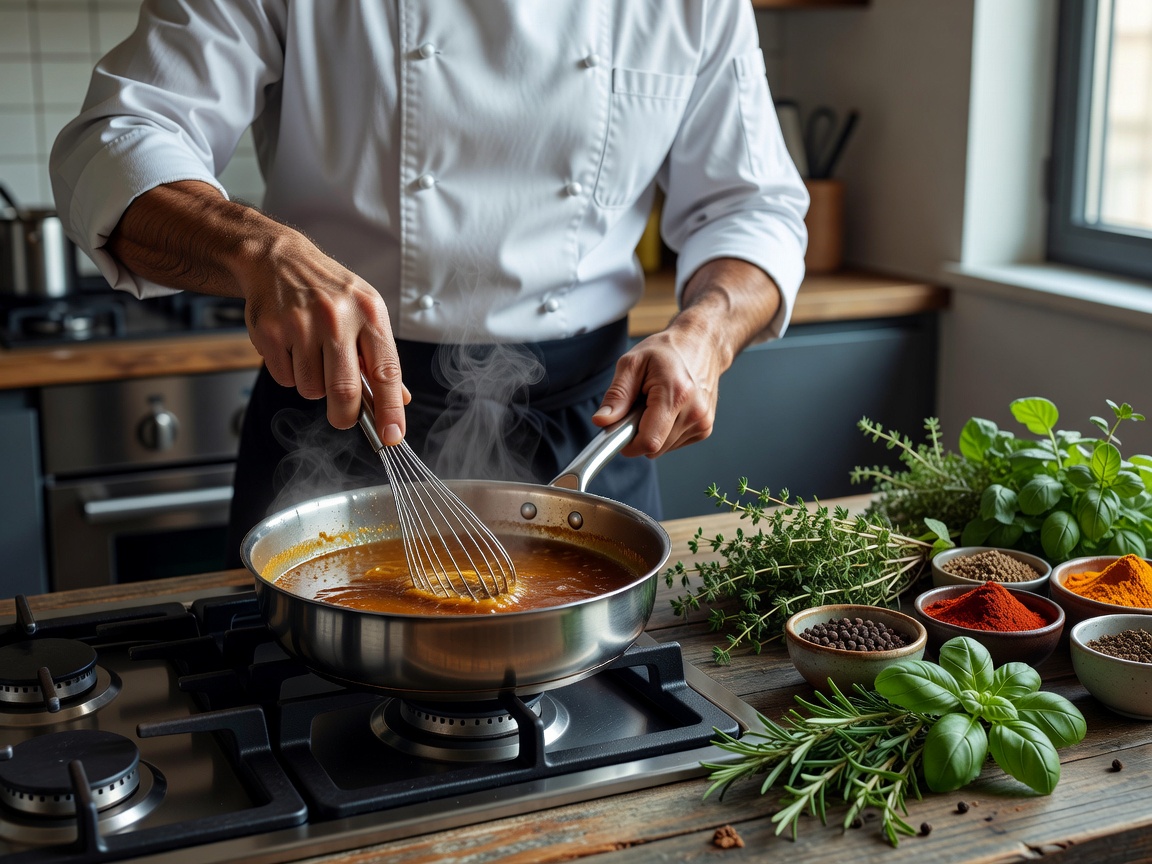
Great cooking often hides in the liquid and the last-minute adjustment. Sauce & Seasoning classes isolate those skills so you can improve almost any cuisine theme you already enjoy. Instead of memorising dozens of unrelated recipes, you learn frameworks: how water cooks off in a reduction, how fat and water phase together in an emulsion, and how salt, acid, bitter, sweet and aromatic notes interact on the palate.
Basic sauce principles start with stock-like liquids, pan drippings, dairy, pureed vegetables or simple vinaigrette structures. You will observe viscosity—when a spoon leaves a trail—and learn to correct sauces that are too thin, broken or dull. Reduction concentrates flavour but also salt, so timing of seasoning becomes a conscious choice.
Emulsification demystifies mayonnaise-style sauces, butter finishes and vinaigrettes. You practise adding fat gradually, using mustard or egg yolk as helpers where appropriate, and rescuing slight breaks with patience and temperature control. Herbs and spices are introduced as layered tools: blooming spices in fat, steeping, grinding fresh and finishing green.
Acidity is the brightness many home dishes miss. Lemon, vinegar varieties and wine reductions (used educationally) show different edges. Salt teaching goes beyond “add more” into crystal types, timing and tasting discipline. A controlled touch of sweetness can round tomato or spice-heavy sauces without turning them into dessert. Texture—silky, chunky, spoon-coating—is treated as a design decision.
Based in Aargau, Switzerland, these lessons aim to make you faster at diagnosing flavour. When something tastes flat, you will have a short mental checklist rather than random spice shaking.
What You Can Explore
Base liquids, thickeners, mounting with fat and deciding between pan sauces, cold emulsions and slow simmers.
Evaporation rate, pan width effects, skimming and stopping before flavours turn harsh or salty.
Stable vinaigrettes, warm butter sauces at educational level, and understanding why temperature shocks break mixes.
Fresh versus dried potency, stems in simmering liquids, chiffonade and late additions for perfume.
Toasting, grinding, blooming in oil and balancing warm spices against acidity and freshness.
Structured tasting order, comparing acids and salting early versus finishing flakes for texture.
Micro-adjustments with sugar, honey or reduced vegetables; pureeing versus leaving rustic pieces.
Checklist tasting: aroma first, then salt, acid, richness, heat and aftertaste corrections.
Lesson Format
Class structure may vary depending on the selected lesson and individual requirements.
Define the sauces you will build and the tasting vocabulary you will use for adjustments throughout the session.
Portion ingredients for side-by-side comparisons so differences in technique are obvious on the spoon.
Run short drills: reduce a base to two thicknesses; whisk a vinaigrette to stable gloss; bloom a spice mix.
Nap a vegetable, grain or protein element with your sauce and finish seasoning at the pass.
Taste intentionally muted samples and practise correcting them—building reliable instinct for home cooking.
Pantry anchors may include stocks or vegetable broths, butter, oils, mustards, citrus, vinegars, alliums, fresh herbs, whole and ground spices, pepper, salt types and optional dairy. You will learn to taste salty components before combining freely.
Practical techniques include off-heat butter mounting, strainer use for smoother textures, and holding sauces warm without splitting. Notes emphasise cleanliness—sauce work shows stray burnt bits quickly.
Class structure may vary depending on the selected lesson and individual requirements.
Who It May Suit
Cooks who sense something missing but lack a systematic way to correct dishes.
Learners who cook many styles and want transferable seasoning skill.
People past basics who want refined pan sauces and dressings.
Hosts who want reliable finishing sauces that polish simple mains.
FAQ
No. Education covers broader principles including vinaigrettes, pan sauces, herb oils and spice-led mixtures.
Some classic techniques involve wine reductions; alcohol-free alternatives can be discussed when you enquire.
Related Classes
Describe the sauces you want to master. Cooking education in Aargau, Switzerland.
Send an Enquiry