01
Kitchen fundamentals
Workbench setup, tool layout, safe movement between sink, board and stove, and habits that keep clutter from interrupting cooking flow.
Beginner Cooking
Build essential skills—knife handling, ingredient preparation, heat control, pan selection, seasoning and simple methods—so ordinary meals feel manageable and enjoyable in Aargau, Switzerland.
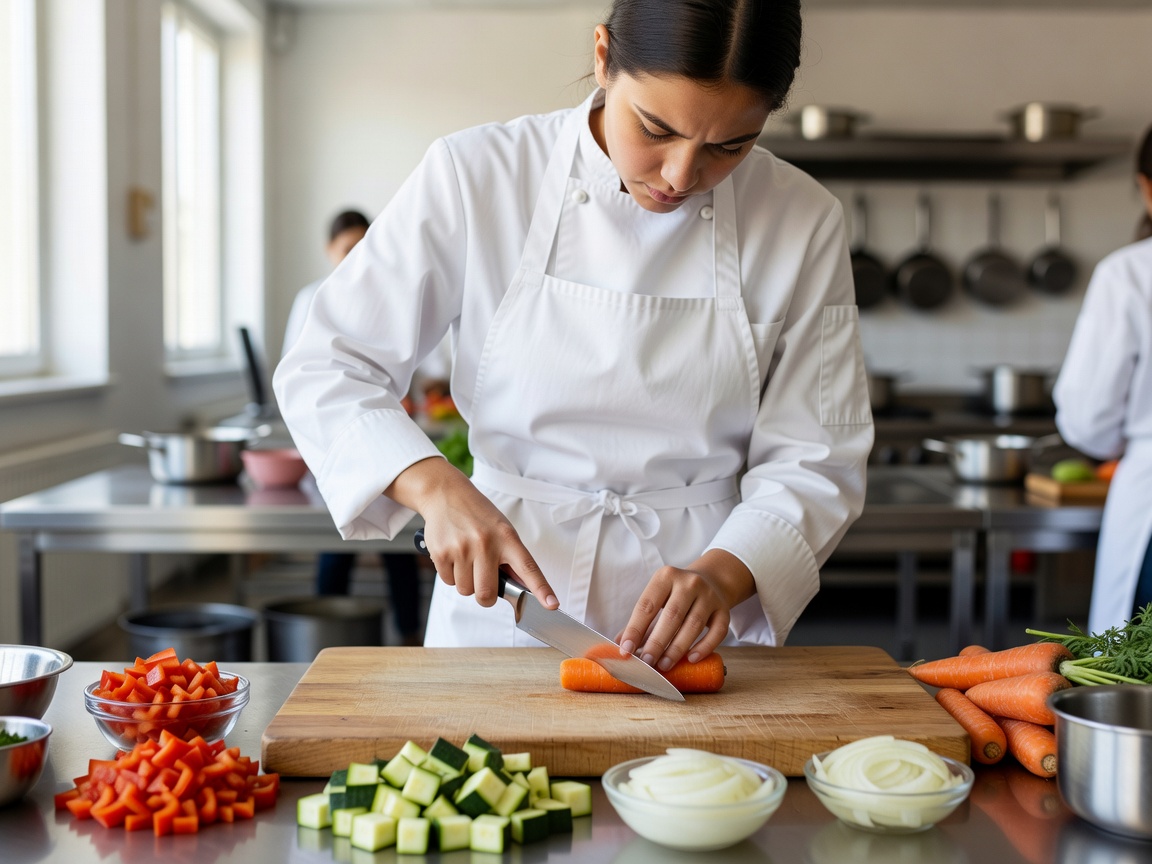
Beginning a cooking journey can feel overwhelming when recipes assume you already know how hot a pan should be, how fine to chop an onion, or when salt should go into a pot. Beginner Cooking with digestjollyfed focuses on those underlying habits first. Instead of racing through complicated menus, lessons slow down the kitchen so you can see cause and effect: how knife position affects safety and speed, how oil behaves at different temperatures, and how seasoning changes a dish in small, deliberate steps.
Many new cooks collect tools and ingredients without a reliable sequence for using them. This class theme emphasises kitchen organisation, clear work surfaces and a calm mise en place. You learn to read a recipe as a plan rather than a mystery list—identifying preparation tasks, grouping equipment and deciding what must happen before heat is applied. That planning mindset reduces stress and prevents the common problem of unfinished chopping while something already burns on the stove.
Heat control sits at the centre of beginner confidence. You will explore how to preheat pans properly, recognise visual cues in oil and butter, and adjust burners when food browns too quickly or steams when it should sear. Pan selection is discussed in practical terms: why a heavy skillet differs from a thin saucepan, when nonstick helps eggs, and how pot size influences reduction and boiling behaviour. These are transferable observations that stay useful long after any single recipe is forgotten.
Seasoning is taught as an ongoing conversation with the food rather than a single pinch at the end. Lessons cover tasting with intention, balancing salt with acidity, and understanding when herbs are better added early or late. Simple cooking methods—boiling, simmering, sautéing, roasting and basic steaming—are practised with approachable ingredients so you can repeat them at home with seasonal produce available in Aargau, Switzerland.
The goal is not perfection on day one. It is familiarity: knowing where to stand at a board, how to hold a knife, how to recover when something sticks, and how to finish a plate that tastes cared for. Beginner Cooking is ideal if you want structured guidance without pretence, and if you prefer education that respects real home kitchens rather than professional theatre alone.
What You Can Explore
Workbench setup, tool layout, safe movement between sink, board and stove, and habits that keep clutter from interrupting cooking flow.
Grip, claw hand, basic slices, dice and mince with attention to stability, board choice and steady pacing rather than speed contests.
Washing, peeling, portioning and organising components so they are ready when heat is applied—true mise en place for home cooks.
Reading pan temperature, managing hot spots, choosing medium versus high heat, and recovering when browning outruns your timing.
Matching cookware to task: sauté pans for quick cooking, saucepans for liquids, sheet trays for roasting, and lids for controlled steam.
Salt timing, pepper, simple acids, aromatics and tasting in stages so flavours build instead of being corrected only at the end.
Boil, simmer, sauté, roast and steam practised with clear cues for doneness, moisture and colour on everyday ingredients.
Sequencing tasks, using downtime productively and finishing components so a complete meal lands together with less scramble.
Lesson Format
Class structure may vary depending on the selected lesson and individual requirements.
Review the day’s methods, safety notes and ingredient roles. Clarify vocabulary such as simmer, sauté and mise en place so instructions later feel concrete rather than abstract.
Arrange boards, towels, bowls and measured ingredients. Practise stable cutting posture and portion produce into labelled containers before any pan is heated.
Repeat foundational cuts, heat a pan correctly, observe oil shimmer and cook a simple aromatic base. Adjust burners while noticing sound, smell and colour changes.
Combine practised elements into a coherent plate—such as a sautéed vegetable side with a seasoned grain or a straightforward pan sauce—while managing order of operations.
Discuss seasoning balance, texture and what to change next time. Reinforce cleanup routines and note home-kitchen adaptations for equipment you already own.
Ingredient Guidance
Beginner sessions favour ingredients that forgive slight timing variation while still teaching clear lessons. Onions, garlic, carrots, courgettes, sturdy greens, eggs, dried pasta or rice, tinned tomatoes, lemon, yoghurt or cream in small amounts, and basic herbs illustrate technique without demanding advanced butchery or rare produce.
Quality still matters: fresh produce that smells clean, oils suited to the heat level, and salt you can pinch consistently. You will practise evaluating ripeness, drying washed vegetables so they brown rather than steam, and storing prepped items briefly during class without losing texture.
Allergen and preference notes can be shared at enquiry stage so ingredient lists remain practical for your household. The educational focus stays on method—how ingredients behave—rather than rigid recipes that cannot travel home with you.
Illustrative schedule only. Class structure may vary depending on the selected lesson and individual requirements.
Practical Techniques
Knife skills start with a stable board, a sharp appropriate blade and a secure grip. You practise guiding the knife with a curled non-dominant hand, keeping tips forward and letting the blade do the work. Uniform pieces are encouraged not for restaurant appearance alone, but because even sizes cook evenly—an essential early lesson.
Heat control drills include preheating an empty pan briefly, adding fat, and testing with a small piece of vegetable or a water droplet where appropriate. You learn the difference between crowding a pan (which steams) and giving food space (which browns). Deglazing with a splash of water or stock introduces the idea that flavour stuck to a pan is an asset, not a mistake.
Seasoning practice involves tasting unsalted bases, adding salt incrementally, and comparing before-and-after spoons. Lemon, vinegar or a fresh herb finish shows how brightness changes perception of richness. Timing exercises might pair a longer-cooking grain with a quicker vegetable sauté so you experience staggered starts.
Kitchen organisation threads through everything: wiping edges, returning tools, and keeping raw prep separate from finished food. These unglamorous habits are what make cooking sustainable on weeknights in a real Aargau home kitchen.
Who It May Suit
People who rarely cook beyond reheating and want a calm introduction to real preparation and stovetop work.
Anyone setting up a first kitchen and hoping to build reliable routines with limited equipment.
Home cooks who can follow instructions but feel unsure when recipes leave gaps about heat, timing or texture.
People restarting after a long break who want structured practice without advanced culinary jargon.
Learners who enjoy food and want vocabulary and techniques that unlock broader class themes later.
FAQ
No. Classes focus on safe, effective technique with practical tools. You can discuss equipment expectations when you enquire.
It is designed for foundational skills, but also helps cooks who want to rebuild basics with clearer method and organisation.
Emphasis is on techniques and complete simple dishes rather than elaborate multi-course restaurant menus.
Share preferences and constraints in your enquiry so ingredient choices can be discussed before a session is arranged.
Related Classes
Tell us about your experience level and goals. Based in Aargau, Switzerland—practical cooking education without unnecessary complexity.
Send an Enquiry