01
Pasta preparation
Dried and fresh approaches, water ratios, salting, stirring to prevent clumping and recognising al dente texture by taste and feel.
Italian Cooking
Study pasta preparation, sauce fundamentals, herbs, olive oil, dough basics, cooking timing and thoughtful plating through culinary education in Aargau, Switzerland.
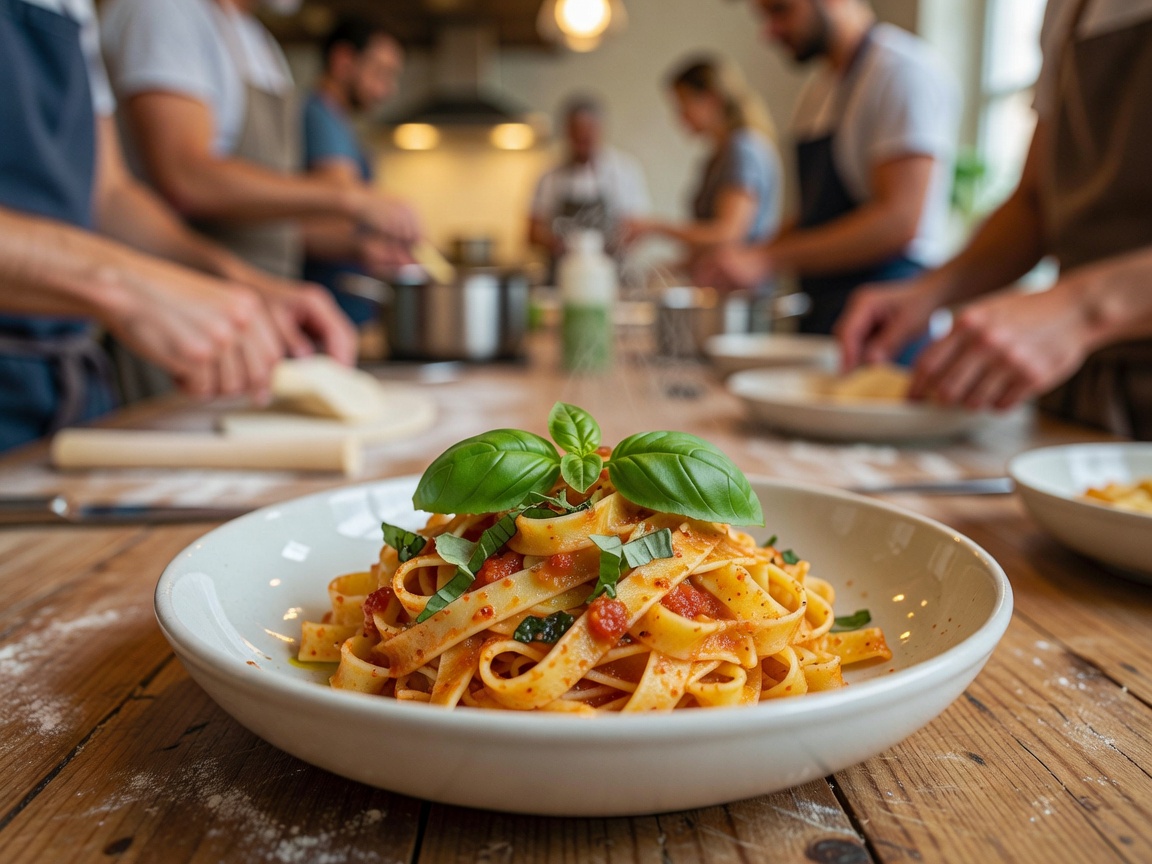
Italian-inspired cooking rewards patience with ingredients that look simple on paper—flour and eggs, tomatoes and olive oil, basil and garlic—yet reveal depth when technique is deliberate. This class theme explores those building blocks as educational practice. It does not claim regional certification or speak for every Italian tradition; instead it teaches methods commonly associated with Italian home and trattoria-style cooking so you can understand texture, emulsification and timing in your own kitchen.
Pasta is often treated as a vehicle, but shape, surface and doneness change how sauce clings. Lessons examine when to salt pasta water, how to finish noodles in the pan with sauce, and why reserving starchy cooking liquid matters. Whether working with dried shapes or experimenting with fresh dough, you will connect flour choice, kneading feel and resting time to the bite you want on the plate.
Sauce fundamentals receive equal attention. A tomato sauce simmered with care tastes different from one rushed on high heat. Oil-based sauces depend on emulsifying fat with pasta water. Meat or vegetable ragùs teach long flavour development and skimming. You will practise building bases with soffritto-style aromatics, understanding how onion, celery and carrot sweetness supports later acidity and herbs.
Herbs and olive oil are treated as structural ingredients, not garnish afterthoughts. You will compare adding sturdy herbs early versus tearing delicate leaves at the end, and discuss how oil quality influences finishing versus cooking. Dough basics may include fresh pasta sheets or simple flatbreads depending on the lesson plan, always with an emphasis on tactile cues—smoothness, elasticity and moisture—rather than strict dogma.
Plating in this context means clarity: portioning pasta so sauce distributes, creating height without gimmicks, and choosing bowls or plates that keep heat. Cooking timing ties the room together—sauce nearly ready before pasta drops, vegetables finished in parallel, cheese and zest standing by. Based in Aargau, Switzerland, these sessions translate Italian-inspired ideas into practical education for curious cooks.
What You Can Explore
Dried and fresh approaches, water ratios, salting, stirring to prevent clumping and recognising al dente texture by taste and feel.
Tomato bases, oil emulsions, light cream styles and slow ragù logic—building body without masking primary ingredients.
Classic pairings such as tomato-basil, lemon-herb, mushroom-thyme and how contrast keeps rich dishes lively.
Basil, oregano, rosemary, parsley and sage—when to bruise, chop, infuse in oil or finish raw for aroma.
Choosing oils for gentle cooking versus finishing, avoiding harsh smoke, and using oil to carry garlic and chilli flavours.
Hydration, kneading windows, resting and rolling for fresh pasta or simple doughs that teach gluten development by touch.
Synchronising sauce reduction with pasta boiling and vegetable sides so everything meets while textures are at their best.
Warm vessels, controlled twisting or spooning, sauce-to-pasta ratio and finishing cheeses, zest or herbs cleanly.
Lesson Format
Class structure may vary depending on the selected lesson and individual requirements.
Explain how pasta, sauce and finishes interact. Set expectations for dough texture or sauce consistency and outline safety around boiling water and hot oil.
Chop aromatics uniformly, portion cheeses and herbs, measure flours or dried pasta, and stage pans so sauce and noodles can finish together.
Knead and rest dough or build a sauce base, tasting for sweetness, acidity and salt. Practise emulsifying pasta water into fat-based sauces.
Boil pasta to the right stage, transfer to sauce, adjust thickness and season. Cook accompanying vegetables or simple proteins if included in the plan.
Evaluate chew, sauce cling and aroma. Plate with intention and discuss home substitutions available in Swiss markets.
San Marzano-style or other good tinned tomatoes often outperform bland out-of-season fresh fruit for sauces—lessons explain why. Garlic is cooked pale gold rather than bitter brown. Chilli flakes are bloomed in oil carefully. Parmesan or similar hard cheeses are grated fine for melting into sauces; larger shards suit finishing.
Practical techniques include manual emulsification by tossing pasta vigorously in a wide pan, using tongs to coat strands, and checking sauce viscosity by how it sheets on the back of a spoon. For fresh dough, you will feel when it stops sticking excessively and springs lightly under a fingertip.
Timing boards help: start long sauces first, bring pasta water to a boil later, drop pasta when sauce is nearly ready, then finish together for one to two minutes. This rhythm is the heart of Italian-inspired weeknight cooking education.
Class structure may vary depending on the selected lesson and individual requirements.
Who It May Suit
Cooks who want sauces that cling properly and pasta that tastes seasoned throughout, not only on the surface.
People who enjoy serving shared bowls and want reliable timing for guests without restaurant-level stress.
Learners building a repertoire of emulsions, reductions and dough feel transferable to other cuisines.
Newer cooks ready to move beyond plain boiled noodles into intentional sauce work with approachable steps.
FAQ
No. It is culinary education inspired by Italian techniques and dishes, not a certified regional culinary school programme.
Tomato sauces are common teaching tools, but lessons may also explore oil-based, herb-led or vegetable sauces depending on the plan discussed at enquiry.
Not necessarily. Some sessions use dried pasta or hand-rolled approaches. Mention equipment when you enquire.
Related Classes
Share your interests—fresh pasta, sauces or timing practice—and we can discuss options in Aargau, Switzerland.
Send an Enquiry