01
Ingredient preparation
Uniform cuts, marinade contact time, sauce premixes and mise en place designed for rapid cooking stages.
Asian Cooking
Explore ingredient preparation, knife techniques, stir-frying, steaming, sauces and rice methods inspired by selected Asian cuisines—educational cooking in Aargau, Switzerland.
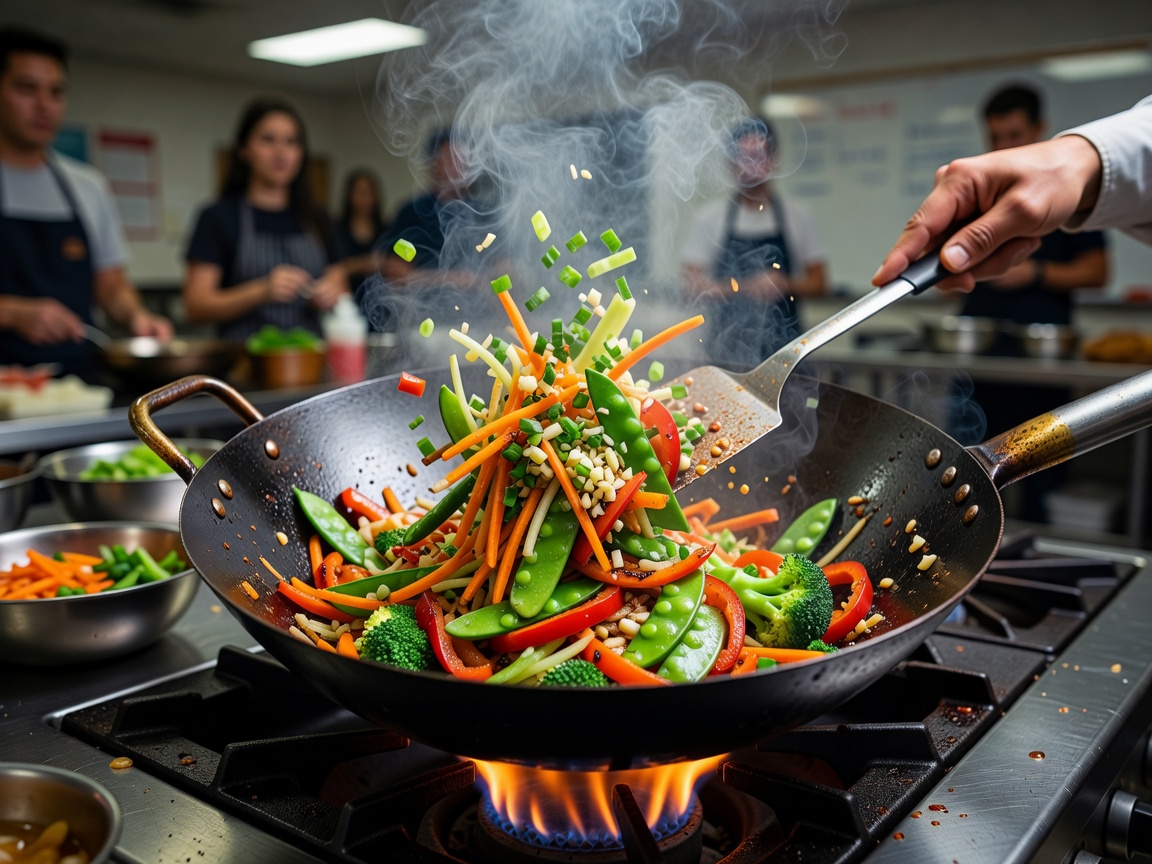
Asian culinary traditions are vast, regional and diverse. A single class series cannot represent every cuisine across the continent, and digestjollyfed does not claim to do so. Asian Cooking here means guided practice with techniques and flavour patterns commonly taught in educational settings—high-heat stir-frying, gentle steaming, aromatic bases, balanced sauces and attentive rice cookery—so you gain confidence working with ingredients and methods you may already enjoy eating.
Preparation is unusually important when heat is intense and cooking windows are short. Lessons emphasise cutting ingredients to compatible sizes, drying surfaces for sear, and lining up sauces before the burner goes on. Knife techniques cover batons, thin slices and mince suitable for quick cooking, always with safety and efficiency in mind.
Stir-frying teaches sequencing: oil heat, aromatics first, denser vegetables next, tender items later, sauces last. You learn to keep food moving, avoid overcrowding and recognise when a pan has cooled too much. Steaming offers a contrasting calm—layered flavours from aromatics in the water or under the food, precise timing and careful lid management.
Sauces often combine salty, sweet, sour and umami elements. You will practise measuring, tasting and adjusting rather than pouring bottled mixtures uncritically. Rice preparation covers rinsing, water ratios and resting, acknowledging that different grains behave differently and that good rice elevates everything beside it.
Balancing flavours is the intellectual heart of the theme: how chilli heat meets acidity, how sesame or ginger perfume a dish, how a final sprinkle of spring onion changes aroma. Located in Aargau, Switzerland, classes help you adapt these ideas with ingredients you can source locally while respecting that inspiration is not the same as total cultural coverage.
What You Can Explore
Uniform cuts, marinade contact time, sauce premixes and mise en place designed for rapid cooking stages.
Bias slicing, julienne, smash-and-mince for garlic and ginger, and safe board habits under time pressure.
Heat management, batch cooking when needed, tossing technique and preserving crisp-tender vegetable texture.
Setting up steamers, spacing food, timing fish or vegetables, and using aromatics for gentle fragrance.
Garlic, ginger, spring onion, chilli and spice pastes—order of addition and how raw versus cooked notes differ.
Building mixed sauces, starch slurry finishing, reducing lightly and tasting for salt-sweet-acid balance.
Rinse quality, absorption methods, resting grains and fluffing without crushing for clean-separated texture.
Adjusting heat, brightness and savouriness so dishes feel complete rather than dominated by one note.
Lesson Format
Class structure may vary depending on the selected lesson and individual requirements.
Clarify whether the session emphasises stir-fry, steam, sauce or rice, and note that inspiration draws from selected methods rather than an entire continent’s cuisines.
Complete all chopping, mix sauces in bowls, portion proteins or tofu if used, and arrange ingredients in cook order beside the stove.
Practice heating pans correctly, blooming aromatics without scorching, and adding ingredients in timed waves on a smaller test batch.
Cook the main dish with sauce finishing, prepare rice or a steamed side, and keep textures distinct through disciplined timing.
Taste for salt, acid, heat and aroma. Discuss pan size limitations at home and how to scale batches without steaming unwanted moisture.
Common educational ingredients may include soy sauce or alternatives, rice vinegar, sesame oil as a finish, fresh ginger, garlic, seasonal vegetables, eggs, tofu, noodles or rice, and herbs such as coriander where appropriate. You will learn to taste salty condiments before heavy seasoning elsewhere.
Practical wok or skillet technique includes preheating until a drop of water evaporates quickly (where safe and suitable), adding oil that runs freely, and working in batches. Steaming practice covers water depth, avoiding condensate dripping on delicate food, and rest time after heat is off.
Sauce slurry technique—mixing starch with cold liquid before adding—prevents lumps and gives gloss. You will add it gradually while stirring to reach a coating consistency that clings without turning gluey.
Class structure may vary depending on the selected lesson and individual requirements.
Who It May Suit
People who want cleaner stir-fries with brighter vegetables and less stewing in crowded pans.
Learners fascinated by salty-sour-sweet-heat interplay and sauce building from components.
Cooks who like fast methods once prep is complete and want a reliable prep-cook rhythm.
Students exploring multiple cuisines who need foundational Asian-inspired methods without overclaiming authenticity credentials.
FAQ
No. Sessions focus on selected techniques and flavour patterns. They do not represent every Asian cuisine.
A wok helps with shape and heat, but many techniques can be practised in a spacious heavy skillet. Mention your equipment when enquiring.
Plans aim for ingredients obtainable with reasonable effort; substitutions can be discussed in advance through your enquiry.
Related Classes
Describe the techniques you want to practise. Educational cooking classes based in Aargau, Switzerland.
Send an Enquiry